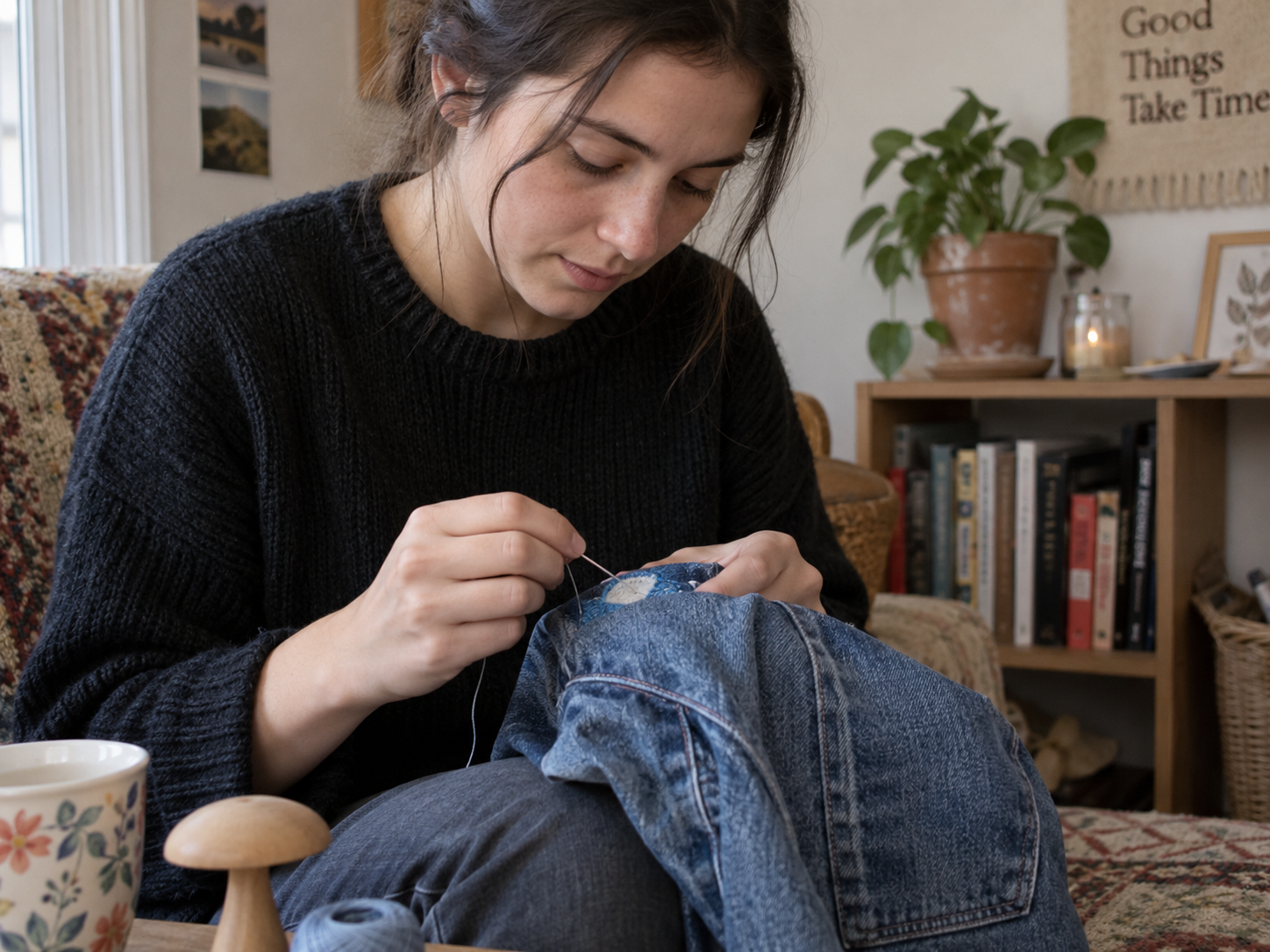
Come on in and sit down, dear reader!
A Use What You Have Home requires that you know what you have. We’ve already talked about doing a full inventory of the food in your house. And why is that important? Knowing what food you have, and roughly where it is, helps you meal plan and not overbuy. Let’s continue to compile information on what we have, this time thinking about skills and information. Consider these skills and resources, and make a list of what you have, including any others you may think of.
Skills
– can you knit, crochet, make and repair clothing or quilt?
– can you do simple household repairs?
– automotive repair?
– grow food?
– preserve food by canning, freezing, dehydrating?
– butchering?
– raise/hunt food animals – meat, fish, eggs, milk?
– cheese making, sourdough baking, kombucha making?
– making/using herbal remedies?
– soap or candle making?
– baking?
These skills mean you can make or repair something yourself, which saves money. You might be able to make some money by offering your skill to others. Or, you can barter with neighbours and friends – George across the street has a rototiller, but he has clothing that needs to be repaired and he can’t even thread a needle. I can hem, replace buttons, and mend holes in jeans in exchange for George tilling my garden. You might even make some money offering a class, so others can learn from your experience. Or ask a grandmotherly-type to teach you to knit if you bring her a coffee or some cookies every time you get together. Hanging out with an older person is just a great opportunity for friendship and for you to learn how they survived tough times.
Information
Do you have access to any of the following?
– A community of friends/family that barter and share garden produce, raise animals, build and repair things, enjoy teaching their skills
– A home library of non-fiction books – homesteading skills, food preservation etc
– A nearby public library and the skills to look for helpful books and resources
– YouTube University – it’s not an official place, it’s just how my husband and I refer to learning new skills by watching YouTube videos.
Supplies
Do you have a vacuum sealer, sous vide set up, scoby for kombucha, sourdough starter, basic tool kit, sewing machine, freezer, dehydrator, canning pot and jars? A basic food dehydrator, your grandmother’s recipe book, a box of well-used jeans? Check out the things you’ve been storing in your basement or attic, and things in your parent’s basement and attic. There may be supplies there to start an old-fashioned hobby.
Why This Inventory Matters
It’s so easy to look at the modern homesteaders on social media, and be overwhelmed before you even begin to learn a new skill. “They” have a freeze dryer, laying hens and a 1/2 acre garden. They may have a huge kitchen, with 2 gas stoves and a wood-burning pizza oven. It’s “easy” for them to be self-reliant, we think. And it’s “too hard” for us. Let’s put aside some of our pre-conceived ideas about being self-reliant. We can start where we are, even with a small income, even with very few skills, even in a tiny house in town. I hope this inventory has shown you that you do have some skills, even if you think they are not that important.
Take Your Time
You should learn one skill at a time, and practice that skill for a couple of months before starting on another learning curve. You will fail sometimes, and with each failure, you will learn how to do things better. You might decide this skill is bringing you nothing but stress, or you may decide to press on and try again.
Do it the Old-Fashioned Way
Every “old-fashioned” skill you learn will give you self-confidence, provide a low-spend hobby, and help you make and maintain items for your home. Keep in mind: it is tempting to spend a lot on supplies when starting a hobby. Take your time, buy the absolute basic supplies and put the word out that you are looking for great deals on <name the hobby>. For example, when I say quilting, I’m not talking about starting with making a complicated king-sized quilt with designer fabrics (easily $30 per meter in 2026). I’m referring to the kind of quilts my grandmother made, constructed of recycled fabric from old clothing, filled with an old blanket or a beyond-repair older quilt. When you are learning to quilt, don’t get caught up buying new fabrics, patterns and a new sewing machine. You need a basic straight stitch machine (unless your hand sewing is very tiny and neat), some thread, some kind of filling, a sheet for the back, and scraps for the front. Start with a couch quilt, or even a pot holder if a whole quilt is intimidating. It’s nice to work with crisp, beautiful batik fabrics, 100% cotton thread and bamboo batting, but a scrap denim quilt tied with yarn, and a used blanket for the back keeps you just as warm, and can be machine washed and dried without fear. On a cold night, a warm quilt over your feet means you can turn down the thermostat a couple of degrees and save a few pennies – aren’t you clever?
Adding Supplies
What if you don’t have what you need to finish a particular project? Before buying new at full-price, look for sales on the supplies, check thrift stores and put out the word that you are learning to can food to save money and would love any jars, recipes and tools that anyone wants to share. Once my friends knew I love to sew with recycled garments, I started receiving boxes of fabric, garments, scraps, lace and doilies, buttons etc. I also regularly pass on sewing supplies I’m not using to other sewists. We have a social media page for folks in our church to give away household goods, dishes, clothes, etc. It’s as much fun to fill a need as to receive something!
Make a Small Goal and Give it a Try!
Spend a little time in the next few days taking stock of your skills, and next steps you could take to use those skills more. Or plan to research a new-to-you skill, at the library or using Youtube. Ask friends for information, help learning or supplies they no longer need. And celebrate your willingness to try new things!
Leave a Reply